
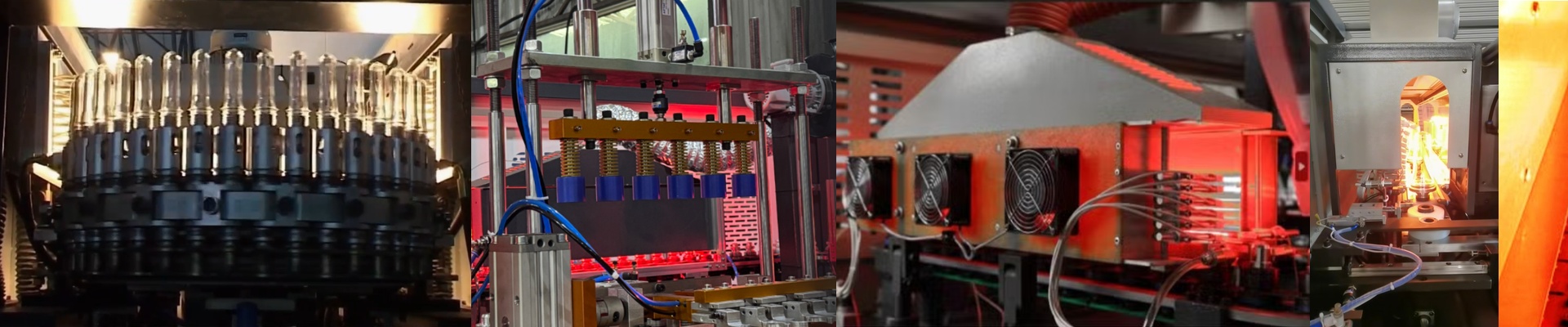

Out on the line, the blow molder sits idle, waiting on the preform heating profile. If the lamp isn’t pulling its weight, you know it the second you see the bottles—thin walls, crystallization, or stretch that’s all over the place. The preform warming lamp sits dead center in the heating tunnel, and what it puts out directly sets the pace for cycle time and the quality coming off the machine.
What matters under the hood
We build these lamps around short-wave infrared quartz emitters, tuned to the PET absorption band so the heat gets in fast and deep. The specs are matched to what’s actually running on the floor: 2400W to 4000W per lamp, 230V or 400V, R7s connector for a direct swap, and a compact length that fits tight heating tunnels without clearance issues. The quartz tube takes the thermal cycling, and the reflector focuses the energy where it needs to be—on the preform neck and body. The result is stable radiant heat that keeps the heating profile repeatable, shift after shift.
Why it holds up on these machines
This lamp is engineered for blow molding—Sidel, Krones, SIPA, Husky, SACMI, and Nissei ASB. Match the wattage and geometry to the OEM tunnel, and you get the original heating curve back without having to re-tune the oven. Fewer rejects, more consistent bottle weight, and you can push faster cycles without cooking the preform. Energy use comes down because the emitter delivers heat on demand, with a fast start-up and minimal standby loss. We’ve got units running 5,000+ hours with less than 5% output drop, which means fewer lamp changes and less downtime.
The practical details
Installation is straightforward, but treat the lamp with respect. Never touch the quartz tube—skin oils create hot spots and shorten life. Double-check voltage and connector type before you swap. Keep the reflector clean and aligned; even a small offset throws the heating profile off. If you’re running high-barrier or colored preforms, we can tweak the spectral output to keep the heat even. Match the lamp to the machine, and the heating tunnel does what it’s supposed to—predictably.