
Getting Your Bakery Temps Exactly Right
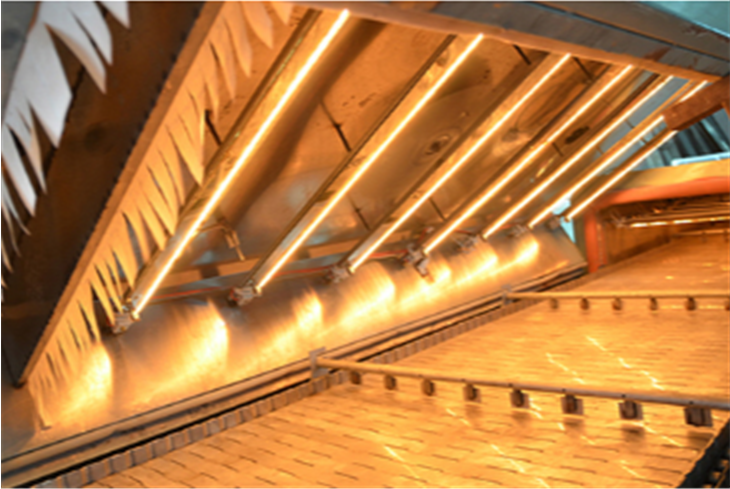
Anyone who’s spent time in a bakery knows the frustration of uneven browning. You pull a tray out and some loaves are perfect, while others are pale or—even worse—raw in the middle. It usually comes down to how your oven handles heat. That’s why we use linear quartz tubes. Unlike those old-school metal coils that take forever to warm up, quartz uses infrared radiation. It doesn’t wait around. The second you flip the switch, the heat hits the surface of your dough. It’s instant.
Why Quartz Just Works
Here is the thing about temperature stability: it’s all about how fast your heater can react. Quartz has very low “thermal mass.” In plain English? It doesn’t hold onto heat longer than it needs to. It fires up quickly and cools down just as fast. This means your PID controller can make tiny, real-time tweaks without that annoying lag you get with heavy metal elements. If you’re seeing your temperatures swing by 10 degrees, it’s rarely the heater’s fault. Usually, your sensor is just in the wrong spot or you’re using a slow element that can’t keep up.
Built to Last (Mostly)
We use high-purity fused quartz because it can handle the shock of being turned on and off rapidly without warping. We also add specific coatings to the glass. This helps the heat actually soak into the dough rather than just scorching the outside of the crust. And since nobody wants a headache during maintenance, we use standard industrial connectors. You can just pop a new one in and get back to baking.
The Trade-off
Now, there is a catch. Because these tubes pack so much power into such a small space, they’re intense. But quartz is glass, and glass is brittle. If your oven vibrates too much or a technician bumps a tube while cleaning, it’s going to crack. **My advice?**Put some mechanical guards around them. A little bit of protection goes a long way. If you pair these tubes with a high-frequency SSR (Solid State Relay), you’ll get the kind of stability you usually only see in those overpriced international brands. When the pulse-width modulation is dialed in, we can keep your temps within ±1°C. That’s the difference between a “pretty good” batch and a perfect one.